Posted by: Silvia on: June 16, 2009
Announcement copied from ReunifyGally:
Whether we agree or disagree with any given Iranian citizen, they ought to have the right to express their views. Here are simple ways you can help them defeat attempts at censorship in Iran:
1. Do you twitter? Change your twitter setting to GMT +3:30 (Tehran time) and your location to any city in Iran. If all of us are Iranians then it is a little harder for government censors to track down Iranian tweeters. (See list of Iranian cities at http://is.gd/13UCt.)
2. Read a list of a few more simple ideas for how you can help at http://is.gd/13TK4
3. Finished with #1 and #2 above? Recruit others to help too. Spread the word. Here are a few ways you can do this:
- Tweet this phrase:Simple ways to help Iranian free speech: http://is.gd/13U0V #IranElection #gr88 Pls RT
- Also consider copy/pasting this announcement into your blog or facebook page so more people will see it. Or simply link to its original home at http://is.gd/13U0V. (If you copy/paste, please copy the text from its original home to ensure that you have any updated URLs or other information.)
- Also, consider voting for this blog post (http://is.gd/13U0V) at one or more of the following: http://www.stumbleupon.com/, http://www.reddit.com/; http://is.gd/13WVR (digg.com) That will help more people find it.
4. Looking for more ideas how to help? Consult http://iran.sharearchy.com/.
Posted by: Silvia on: May 1, 2009
Sometimes I think I live a sheltered life. I live in an area where the worst human misery manifests on my doorstep. It’s where the people live who are considered to be human garbage by much of society. In my professional work, I’ve seen a lot of different ways that human beings can be damaged, sometimes beyond repair. But it’s when I come into contact with privileged children that I am angered, shocked, and saddened in an unexpected way.
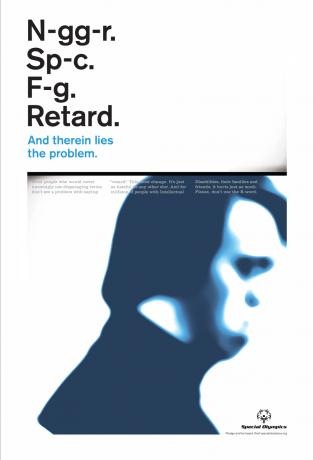
I dearly love these particular children. They are great kids with good hearts and affectionate dispositions. But as I drive them home, I cannot bear the verbal violence I am hearing from the back seat. It’s unrelenting and the worst of it is that they don’t even know what they are saying. It’s part of the everyday speech of these children and their friends.
The first thing I hear is, “What a fattie! You fattie.” I decide to ignore it. But it is repeated as an insult over and over again, like a mantra. Finally, I have to intervene. At this point, I’ve let it go on too long and I say something quite stupid, considering the audience:
“Do you hear what you are saying? Do you realize how size-ist that is?”
Let me mention that even my third year social work students rarely have heard the term “sizeism”, which refers to the marginalization of people based on their physical size. I don’t know why I said that. But I did.
Dead silence. All video games have now stopped. The children don’t say a word.
Finally, the 12 year old ventures, “What’s size-ist?”
I explain it.
“You’re kidding!” Incredulous.
“No, I’m afraid I’m not. It’s the same thing as being racist.”
Silence.
“Even if I’m saying it to a video game?”
“Yes. A racist label is racism. A sizeist label is sizeism.”
At this point, I don’t know how to get out of this conversation, because it’s really not the right way to handle it.
The games start up again.
Then I hear, “You spaz.” “No, you’re a spaz.” “Stop being such a spaz.”
It goes on and on.
I can’t listen anymore.
“You children have no idea what you are saying with the words you use. They are so offensive. I have a very good young friend who is a spaz. She is spastic because she has cerebral palsy. You don’t even want to know how difficult her life is. She has had to have many surgeries to cut tendons on her limbs so that she spasms less. She can’t speak, she needs someone to take total care of her, and her only movements are spastic. So when you talk about being a spaz, you are talking about my friend and you are using this word as an insult.”
My partner gives me a warning look, lays her hand on my arm. She thinks I’ve gone overboard. Maybe I have. But I had to tell them, because they are so ignorant. What they are saying is considered part of everyday speech.
I have often heard the word “girl” used as an insult towards the boys. “Don’t be such a girl.” “You girl.” It’s said by adults around them.
How does this happen in such a privileged, educated setting? And why am I surprised?
Maybe that’s the real question. Why am I surprised?
Posted by: Silvia on: May 1, 2009
A month ago I successfully defended my doctoral thesis.
I had to present my work to the examination committee and answer their questions. Then I left the room while the examiners discussed the outcome. Finally, the committee chair invited me back into the room, shook my hand and said: “Congratulations, Dr. Straka!”
What a moment! It marks the passage from one identity to another: from doctoral candidate to scholar. I had been through an extensive initiation process lasting many years, culminating in this rite of the doctoral examination. I was pronounced worthy and my peers were now welcoming me into the elite community of scholars. A joyful moment – after a journey rife with contradictions.
.
Throughout my PhD, I often critically reflected on my motivation for pursuing a doctorate. I’m someone who already has a privileged social location: white, middle class, and cisgendered. A doctoral degree would push me into an even more elite position. I experienced this as a contradiction because the purpose of my education was to serve those who are marginalized and living in poverty. My PhD would alienate me even further from them, widening the gap.
I’m already different enough from them. A blue collar friend once told me, “I can tell you’re middle class by watching how you walk down the street.” (And it wasn’t because of my clothes.)
Like all middle-class kids, I grew up insulated from the realities of poverty.
My immigrant parents worked very hard to give us a good future. They were successful and I am who I am today because of the advantages I had growing up.
For a long time, I felt entitled to all that I had. It was my birthright, so I believed.
And I thought everyone’s lives were similar to mine – with the exception of the mythical poor. Mythical because I heard about poverty in the media, but had never really seen it. Like all middle class children, the starving poor children in Africa were often mentioned when I didn’t clean my plate. I also had the vague awareness that the “poor children” didn’t get as many toys as I did. But I never saw any real-life “poor children” and my ideas about what they were like came from Victorian children’s books that romanticized poverty, like The Five Little Peppers and How They Grew. As I reached adulthood, I started wondering: Where do the poor people live? The question of poverty was always there in the back of my mind, but the wall between the social classes is high and wide indeed.
So here’s how I decided to live with this contradiction. Concurrent with my PhD process, I made a political and ideological choice to live in solidarity with the poor. These two life choices – pursuing a doctorate and living in marginalized neighbourhoods – became tightly interconnected. I can’t talk about one without talking about the other.
.
My social work education gave me the conceptual tools to understand why society is structured the way it is. But living in disadvantaged neighbourhoods made me get close and personal to those living very different realities from mine — not only in their problems, but also in their strengths.
.
A bonus was that my partner grew up in one of these poor communities. She has been instrumental in helping me understand the ways that people get mercilessly squeezed and pushed and driven to hopelessness.
My values were profoundly re-shaped by where I now chose to live. For example, it was a shock to learn that in Pointe St. Charles, people saw me as rather useless. My partner has highly valued skills. She can fix a car, drywall a room, carry heavy things, grow a garden and paint a staircase. I often felt like people felt sorry for her, because I have so few real skills. And you know… I get where they’re coming from.
For one thing, I was a social worker and people in “the Pointe” hate social workers. On top of that, nobody in my neighbourhood saw the point of higher education. A good union job is more highly valued. They also didn’t understand why I wasn’t out getting a job. And nobody understood that the research contracts I worked on were real jobs. So I had to learn to get over myself and to integrate into my community the best way I could. Otherwise my education would be sheer hypocrisy.
I wept at ugliness of the neighbourhood. It breeds poverty of spirit. I learned to laugh at the clever strategies to scam “the man” and survive (like watching a man systematically steal all the outer metal plates covering the gas pipes going into homes and selling them for scrap). I found myself cheering for the guy trying to outrun the cops who were hassling him for no real reason – and escaping them by hopping a fence. My friends taught me the value of sifting through people’s garbage and stockpiling reclaimed items for future barter. Then there was the time that by accident, I learned that a close friend had no food in the house, when I chided her for not scooping her dog’s poop (because she had no grocery bags…). I learned to stop judging people’s behaviours and instead, to try to understand. Perhaps most important, I learned to respect them and to listen.
So my “education” is really made up of many things. My formal education gave me the lenses, my community gave me the realities, and my partner has helped me to bring them together. Many people have shared their stories and I hope that I have learned how to listen really well.
.
Getting back to my doctorate, what does it mean to me, considering the context in which I earned it?
To begin with, I’m proud of myself. I’ve finished my doctorate in the face of a great many challenges and hurdles. Many people start a doctorate; few finish. I’ve been unbelievably blessed to have the tremendous support of my spouse, my family, my friends, and the supervisor who brought me to the finish line. I can’t even begin to name the many people who contributed to this achievement. It takes a village to get a doctorate, I believe.
I feel like I’ve assumed a sacred responsibility in entering the community of scholars. We are the guardians of a certain type of knowledge. It’s not necessarily the most important knowledge. But it’s a special kinds of knowledge. It’s often been used to oppress. But it is also used to liberate. We debate and contest each others ideas and hope that in the process, we continue to develop what we call “knowledge”. Knowledge is not neutral. It’s inseparable from power. And that’s exactly where I see my sacred responsibility as a social work scholar. How do I use the power I have, by virtue of my doctorate and being part of the academy, in a way that helps create a more just society? Who keeps me honest in this quest?
Can the master’s tools be used to dismantle the master’s house? I think perhaps yes, as long as the person with access to the tools brings them back to the people and works alongside the people in using them. It means always living on the margins – belonging to two worlds and not really belonging to either.
I have my doctorate because I came to my education from a position of privilege. But at the same time, I’ve done it despite a number of serious disadvantages that weave my experiences and my life story together with those of the people with less voice. The only way I can justify my doctorate is to use it in service, to dismantle unjust social structures, to subvert knowledge that perpetuates the status quo, to help educate a new generation of social workers and inspire them to working for a more just society. And I count on my community – real life and virtual – to help keep me honest in the process.
Posted by: Silvia on: March 3, 2009
Note: This article has also been cross-posted to Womanist Musings.

Most people think that heterosexuality is about being attracted to the opposite sex. But it’s more than that. Much more.
Heterosexuality is a lifestyle. Even more so, it’s a powerful social construction that shapes and maintains people’s identities. It acts as a lens that filters people’s understandings and experiences of their world. Heterosexuality also underlies social concepts such as normal, family, family values, Christian, moral, sacred… And of course, heterosexuality occupies a privileged social location — even more so if you are also male, white, and able-bodied.
.
The Gay Liberation movement of the late 1960s contested the hegemony of heterosexuality. It gave voice to alternative identities of gay and lesbian. These activists changed society. They created alternative cultures and ways of being. They critiqued the heterosexual norms and fought hard for acceptance and equal rights.
The problem is that gayness was often constructed in an essentialist manner – you are gay or you are straight. The biological argument was important, because if you are born gay, if it’s part of your genetic make-up, then it’s not your fault that you are gay. You didn’t choose to be gay, nor can you choose to be straight. Biological determinism takes sexual identity out of the realm of morality.
The categories of straight, gay, lesbian were often quite clearly boundaried. And they were sometimes defined in either/or terms, with gay being set in opposition to heterosexuality. One could cross over, but only in one direction — from straight to gay.
.
Since then, categories have been multiplying. It turns out that gay, lesbian, and bisexual or not sufficient to describe the range of sexual identities. In Toronto, we currently use LBGTTIQ2 (expanded from the former LGBTTQ): lesbian, gay, bisexual, transsexual, transgender, queer, intersex, and 2-spirited. Each of these identities has its own advocacy groups and support networks to address issues unique to that group.
.
The boundaries around these sexual identity groups are sometimes problematic. For example, some lesbians ultimately found they were also attracted to men. They moved from the category of lesbian to the category of bisexual, which has been a problematic one. Many lesbians believed bisexual-identified women were not willing to give up their heterosexual privilege and commit to a lesbian identity. But straight people did not accept them among their ranks either. Thus lesbians who entered into relationships with men were often seen as traitors and shunned by their former communities.
Some of my friends have been through this evolution. For example, my friend Robin came out in adolescence as a lesbian. Her parents were unable to accept this identity, resulting in ongoing conflict. Robin embraced her lesbian identity. She cut her hair very short, wore men’s shirts, jeans, and boots, and became a committed activist to the cause. Her most important relationships were in “the community” and she flourished. But in her early 30s, she began to realize she was sometimes attracted to men. She experienced great inner conflict — was she a true lesbian or a pretender? Was she reverting to an easier identity? What the hell was going on with her?
.
Eventually, Robin went away for a while and took time to reflect on these questions. When she came back, her hair was shoulder length and curly and she wore a flowing skirt. I barely recognized her! Robin eventually made a shift in how she identified herself, from lesbian to queer.
Some straight people still have trouble with the word queer, viewing it as a politically incorrect word. It’s not. It has a meaning that is distinct from gay and lesbian. There are even queer studies now. So you can use it — but know what it means.
Queer is an alternative identity to straight. It rejects all other categories of sexual identity. Straight remains normative and has privilege attached to it. Queer encompasses the entire range of non-straight identities — and is not limited to LBGTTIQ2.
Queer views sexual identity as something that is fluid, situational, and shifting. For example, if you come out at age 40, it doesn’t necessarily mean that you were living the “wrong” identity your entire life. It doesn’t mean everything before now was a lie. Sexuality is very complex and multidimensional. Coming out doesn’t necessarily completely annul everything that came before it.
.
More than anything, I view queer as a state of mind.
Queer does not have a need for labels. And it recognizes that sexual identity does not necessarily stay static over time. Queer is transgressive and boundary crossing. It undermines and destabilizes identities and categories. That’s one reason why it can be so threatening to straight people.
Queer dissociates itself from heterosexuality. With the important exception of the power issues attached to heterosexuality, straight is irrelevant to queer. Queer is a different paradigm altogether.
Queer does not name the sexuality of other people. It listens and accepts people’s self-identifications. It is open and curious about the incredible diversity of sexual experience. Queer accepts that people can choose what they want to do and not do — not because of societal strictures but because of their own preferences and values. (Please note that I do, however, limit my definition of queer to anything that happens between two consenting adults, as defined by the legal age of consent.)
Let me give an example of how I view queer as a state of mind. I know of a lesbian couple who lives in suburbia with two kids, an SUV, and a dog. They belong to the PTA and they vote conservative. They do not have a critical consciousness about their sexual identity and they will say that they never have a problem being lesbian moms in their community. According to my definition, these lesbians have more in common with straight than queer. They are living a straight lifestyle, they adhere to their community’s values, they have similar opinions on most things as their neighbours. There is nothing wrong with living in this way. But I don’t have much in common with these women.
On the other hand, there are some heterosexual people that I consider to be more queer than straight. If I tell you this, I am giving you a high compliment! Although you may never desire anyone other than your opposite-sex partner,the way you think about the world and about sexuality is open, fluid, shifting, and you have taken time to really listen to people who identify as queer. That’s what I mean when I say that queer is a state of mind.
.
.
Posted by: Silvia on: February 18, 2009
You think it is self-evident that university students take responsibility for their own learning?
Um. No. It’s not.
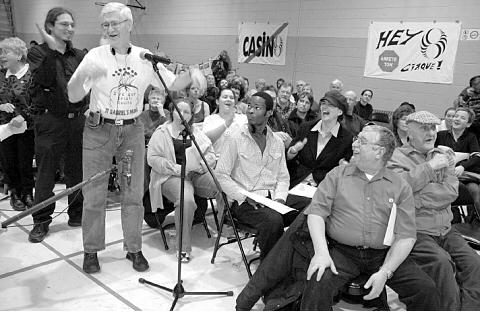
Last year I taught third year social work students in their field practicum seminar. One of the important goals of this seminar was to encourage peer learning and peer support. All 20 students were also doing their first field placement.
I spent an enormous amount of class prep time designing creative and participatory activities. Students were participating in their small groups of 2 or 3, but very reluctant to speak in front of the group of 20.
Now these are social work students – they have to be able to speak in front of groups. It’s part of their job.
After 6 or 7 weeks, they were still not participating. I needed to understand why.
.
.
One day, right in the middle of an interactive activity, I sit down. I stop everything. I can’t go on this way.
I’m not angry with them. But this is a very painful process. So I do what I should have done a few weeks earlier. I tell them:
This is a seminar based on group participation. But most of you aren’t participating.
I’m not blaming you. But I honestly want to know: Is it something about my teaching? Are you not following me? Is there a problem with the content? Please talk to me.
Silence.
More silence.
Finally, a student timidly volunteers,
“We didn’t understand what a seminar was. We thought it was like a regular class. Nobody ever explained that to us.”
Oh.
.
Another student adds:
All our lives we have sat in a class while somebody lectures to us. We take notes. We’re supposed to understand and remember what they tell us. We get tested on it. That’s what we think university is about. That’s our experience. Nobody ever told us that we were responsible for our own learning.
Then others say:
It’s a culture shock, being in a seminar and being told we’re responsible for our own learning. We need time to figure out how to do that.
.
OK, now I’m officially in shock. And my syllabus makes a loud cracking noise and falls in shards around my feet.
But I’m adaptive, if nothing else. I quickly realize that before I can go on with the topic of reflective practice, I have to help them learn how to take responsibility for their own learning. You can’t teach reflective practice very well if nobody is reflecting on their practice!
.
During the next month, I took time during each class for activities explicitly dealing with active learning. We talked about fears, barriers, supports to active learning. I also kept making links to practice – a professional needs to be responsible for her own learning.
To my delight, it worked! Ironically, this was their first experience of reflective practice in community.
In the final exam, I asked them to identify what was the most important learning of the year. One student wrote:
The most important thing I learned was that I am responsible for my own learning.
.
© Silvia Straka and A Just Society, 2008.
Posted by: Silvia on: February 6, 2009
Book review: “Publish and flourish: Become a prolific scholar”
Thomas Basbøll at Research as a Second Language just published a review of Tara Gray’s new edition of her book Publish and Flourish: Become a Prolific Scholar. Here is some shocking information about how much time scholars actually spend in writing:
[Gray] cites research by Robert Boice to make a very instructive point. If you ask a researcher how much time they spend working, they’ll say about 60 hours, and they’ll tell you about half of that is spent on research. But if you get them to keep records of how they actually spend their time, you find that they spend on average 29 hours per week working, of which about an hour and a half is devoted to research. “So these faculty members were working 30 hours per week,” she concludes, “and worrying another 30.” According to Boice, of the 1.5 hours spent on research, a half hour on average is spent writing.
Half an hour a week spent on writing. That’s sad.
After reading this excerpt from the book, Publish and Flourish went to the top of my must-read list. I’m so excited about this book without even having read it, that I wanted to you a heads-up about it.
.
Now I want to share some of what I have learned about boosting my publications.
.
“Write from the first day of your research project”
Gray says to “write from the first day of your research project.” This has always been my practice.
Many scholars think about publishing as something that happens at the end of the research project. Because I see publishing as one way to broaden the research conversation, I take opportunities to publish at every step of the research process.
My doctoral research project originated in a community health care agency. I was working as a researcher partnered with a team of elder abuse social workers. These workers were looking for help in intervening with older women living with intimate partner abuse. My first literature review revealed that there was almost nothing written on the topic and as a result, we developed the research project that became my doctoral study.
The first article on this study was submitted before we even got the research funds. It consisted of my critical review of the literature, demonstrating the gaps and introducing our study. It got published in a leading journal in the field.
The second article was published while I was thinking about the theoretical framework for the study. Because the problem spanned two fields that did not communicate with each other (woman abuse and elder abuse), there was an opportunity for theoretical reflection that could help spark a new dialogue across the boundaries of these two fields. At the time I wrote it, theoretical thinking in the field of intimate partner abuse had stalled and I wanted to make a contribution to getting it going again.
Had I been a full-time faculty member, I would have published numerous other articles before finishing the research. For example:
And that’s just off the top of my head. All these articles would be publishable and make a contribution to knowledge.
Of course, if you are a reflexive scholar, such ideas are constantly germinating throughout the research process.
.
Blogging
I want to also talk about the controversial idea of academic blogging.
Blogging can help me to increase my publications because it requires the regular writing of mini-articles. It forces me to put emerging ideas into words and it allows me to get some feedback.
Through blogging the sometimes overwhelming task of publishing can be broken down into bite-sized pieces, until my thinking is clear enough to write the article.
Blogging nurtures my own thinking in some of the following ways:
Anything that nurtures my thinking ends up nurturing my writing.
Blogging and the use of other emerging media bring exciting opportunities for new ways of communicating our ideas.
(For additional reading on academic publishing and new media, I suggest you read Waking Tiger’s provocative post on Academic Evolution, as he challenges the status quo about academic publishing.)
.
These are two ways I have discovered to increase my writing and publishing. But I’m still a neophyte and would like to hear from others. I invite you to respond in the comments section.
.
.
Image thanks to iDream_in_Infrared
© Silvia Straka and A Just Society, 2008
Recent Comments